Hardback vs Paperback in Ireland: Which Should You Choose?
Hardback or paperback in Ireland? Compare durability, comfort, shelf appeal and portability to choose the format that best fits your reading habits.
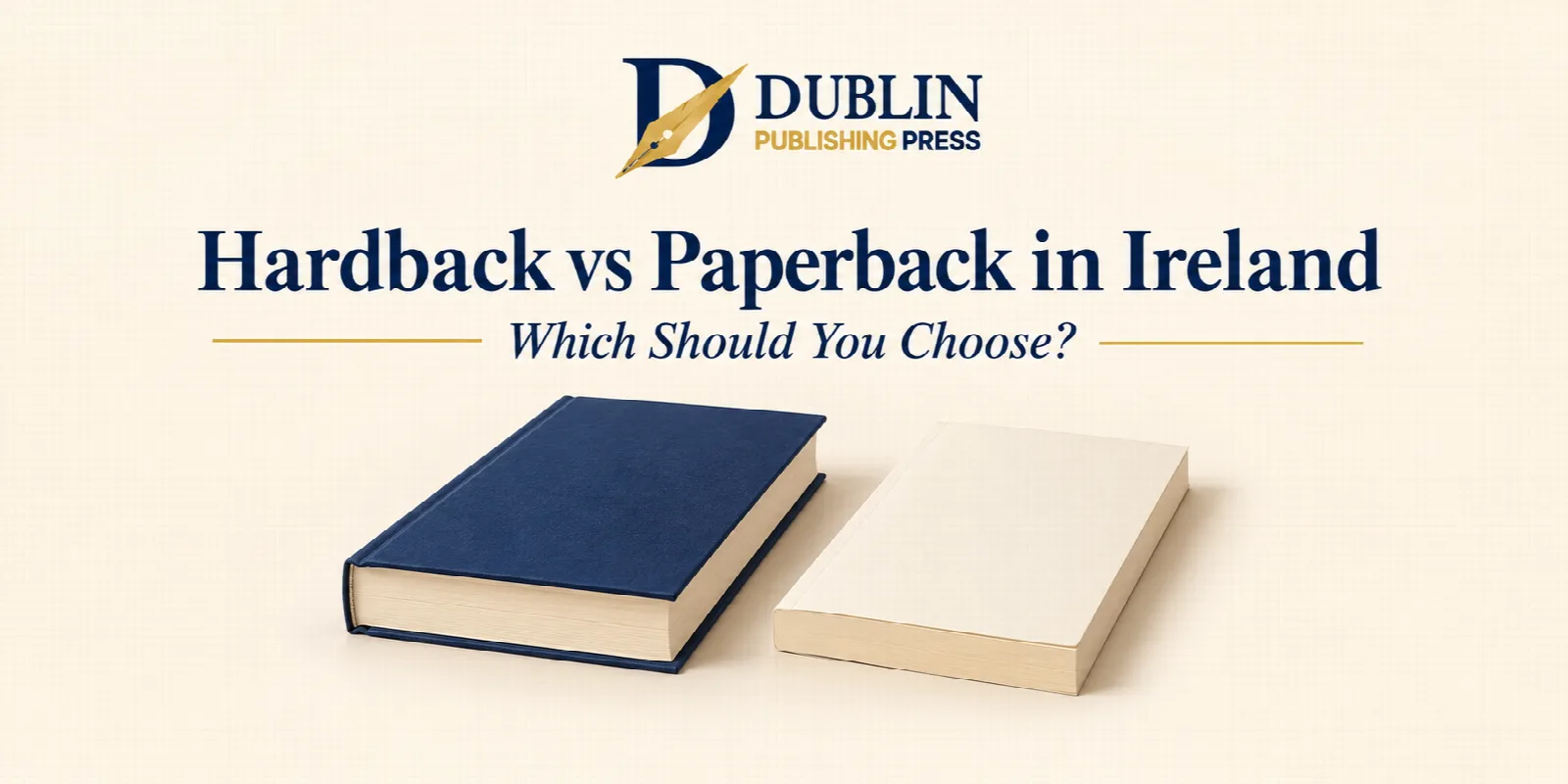
Walk into any Irish bookshop on a wet Saturday afternoon and you'll see the same small ritual playing out again and again. A reader picks up a title in hardback, turns it over, feels the weight of it, then wanders to the paperback table and picks up the same book in a lighter, softer edition. They hold both for a second, as if the decision actually matters. It does.
Hardback vs paperback in Ireland isn't just a question of which one looks nicer on a shelf, although that's part of it. It's a question of how you read, where you read, how long you keep books, and what you're actually planning to do with them once you've finished. Irish readers have their own habits here too: public transport commutes, damp winters, small living rooms, long holidays abroad, book clubs that pass copies from hand to hand. All of that shapes whether hardback or paperback is the smarter pick for any one reader.
This guide works through the real differences between the two formats, the situations where each one wins, and the practical questions Irish readers actually ask before they buy. Along the way we'll also look at how format choice plays into getting your own book printed, something a publishing team deals with every week when authors are deciding how their finished manuscript should actually look on a shelf.
By the end you'll have a clear, sensible way to choose between paperback or hardcover in Ireland, whatever the book, whatever the occasion.
It helps to think of the two formats as answering different questions rather than competing for the same job. A hardback answers the question: will this book still be in good condition in ten years? A paperback answers a different one: can I actually carry this around without it weighing down my bag? Once you frame it that way, most of the confusion around hardback or paperback in Ireland disappears. You're no longer trying to find one universal winner.
What Hardback and Paperback Actually Mean
Before comparing the two, it's worth being precise about what each format actually is, since the terms get used loosely.
A hardback, sometimes called a hardcover, has a rigid board cover wrapped in cloth or printed paper, usually finished with a separate dust jacket that can be slipped off. The pages are sewn or glued into that rigid casing, which is what gives the book its stiffness and its weight. In Ireland, “hardback” is the term you'll hear most often in bookshops and in everyday conversation, while “hardcover” tends to turn up more in online listings and import stock.
A paperback has a flexible card cover, usually laminated for a bit of protection, with the pages glued directly to the spine rather than housed inside a separate casing. There are two real sub-types worth knowing about:
Trade paperbacks are the standard bookshop paperback: roughly novel-sized, decent paper quality, the format most new fiction and non-fiction appears in eventually.
Mass-market paperbacks are smaller, thinner and cheaper to produce, historically sold through newsagents and transport hubs rather than dedicated bookshops. They're far less common on Irish shelves than they once were, and most Irish readers will rarely come across one outside secondhand shops.
A third term worth clearing up while we're here is “trade hardback”. It simply means a standard hardback edition sold through ordinary bookshop channels, as opposed to a limited or special edition produced in a small print run for collectors. Most new hardback releases you'll see on an Irish bookshop table are trade hardbacks rather than limited editions, even when the cover design makes them look like something rarer.
The split between the two formats isn't new. Hardback binding goes back centuries, built for durability at a time when a book was a genuine investment meant to last a lifetime. The modern paperback only became widespread in the twentieth century, once cheaper printing and binding methods made it possible to sell books at a lower production cost without sacrificing readability. That history still shapes expectations today: a hardback still carries a slight sense of occasion that a paperback doesn't, even though both formats are now equally easy to produce.
The distinction matters when you're thinking about format for your own writing too. Length has a real effect on how a book gets bound and formatted for either edition, so it's worth getting clear early on what category your manuscript actually falls into: a novella, a short story or a full novel each carry different expectations around trim size and binding. A short, trim novella will often lean toward a simple paperback, while a sprawling full-length novel is more likely to get the hardback treatment first, particularly in fantasy and literary fiction. Getting this right during book formatting is one of those quietly important steps that decides how comfortable the finished book actually is to hold and read.
Hardback vs Paperback: Key Differences at a Glance
Here's a straightforward comparison covering the practical differences that actually affect day-to-day reading, without getting into pricing, which varies too much by title and edition to be useful in a general comparison.
Factor | Hardback | Paperback |
Durability | Rigid casing resists bending, crushing and spine damage over years of use | Flexible cover is more prone to creasing, curling and spine wear with heavy handling |
Weight and portability | Noticeably heavier, awkward for one-handed reading or carrying around all day | Light, flexible, easy to slip into a bag or coat pocket |
Shelf appeal | Strong visual presence, often chosen for display, gifting and permanent collections | Less commanding on a shelf, but stacks and stores more easily in tight spaces |
Best for | Home libraries, special editions, gifting, books you'll keep for decades | Daily reading, travel, commuting, books you'll read once and pass on |
Notice that the table leaves out price entirely. That's deliberate: cost varies hugely by publisher, print run, edition and retailer, and a blanket price comparison would be more misleading than useful. What's far more stable, and far more useful for choosing a format, is how the book will actually behave in your hands over time.
The cover itself plays a real part in that shelf-appeal line too. A dust-jacketed hardback with carefully considered cover design tends to photograph and display better than a paperback, which is one reason illustrated or special editions almost always appear in hardback first. If you're curious what that kind of work typically costs in Ireland, cover design pricing is worth a look before you budget for your own project.
Weight and portability deserve a second look too, because the gap is bigger than most readers expect until they've actually carried both formats of the same title. A standard adult hardback novel can weigh noticeably more than its paperback equivalent once you account for the rigid boards, the denser paper and the dust jacket. That difference barely registers for an evening on the sofa, but it adds up fast over a long commute, a day at the beach or a weekend trip where every extra gram in the bag matters. It's worth feeling for yourself before committing to a format for a particularly long book: picking up both editions in a shop for even thirty seconds usually settles the question faster than reading any comparison.
Durability and Everyday Use
Durability is where the two formats genuinely diverge, and it's worth being specific rather than just saying hardback lasts longer, because the full picture is more useful.
A hardback's rigid casing protects the block of pages from the kind of bending and crushing that happens when a book gets tossed into a bag, left under a stack of other things, or handled by small children. The stitched or glued binding inside that casing also tends to hold up better over repeated openings, which matters if a book is going to be read, reread, lent out, and read again over years. For reference books, cookbooks that live open on a counter, and books that get passed down through a family, that structural strength is the whole point.
Paperbacks are more vulnerable to spine creasing (that white line down the spine after the book's been bent back too far), corner curling, and cover tearing with heavy use. That said, a paperback handled reasonably carefully, kept flat on a shelf rather than face-down and open, can last for decades without serious damage. The idea that paperbacks are inherently disposable oversells the point: they're simply less forgiving of rough treatment.
Ireland's damp climate is also worth a mention here, something that rarely comes up in comparisons written for drier markets. Paper absorbs moisture, and a book stored in a cold spare room or a damp press over a wet winter will suffer regardless of format, though a hardback's denser paper stock and tighter casing offer slightly more resistance to humidity-related cockling (that wavy, rippled look paper gets once it's absorbed damp air). Either format benefits from being kept on a shelf away from exterior walls and direct radiator heat, which does more for a book's lifespan in an Irish home than format choice alone.
Printing quality matters as much as format here. A well-produced book, whatever the binding, starts with solid book printing using decent paper stock and proper binding glue or stitching. A cheaply printed hardback can fall apart faster than a well-made paperback, so durability is as much about production quality as it is about the format itself.
Binding method matters here too, and it's worth knowing the difference. Sewn or stitched bindings, where sections of pages are physically threaded together before being cased in, tend to hold up far longer than purely glued bindings, where the page block is simply bonded to the spine with adhesive. Many hardbacks use sewn binding, which is part of why they outlast paperbacks under heavy use, but not every hardback does, and some higher-quality paperbacks use stronger glue binding than a budget hardback might. If longevity genuinely matters for a particular book, it's worth checking how it's actually bound rather than assuming the format alone guarantees it.
Illustrated editions raise their own durability questions too. Full-colour interior artwork needs heavier, higher-quality paper to reproduce properly without bleeding through, which is one more reason illustrated titles so often appear in hardback. Producing that kind of book illustration well is a specialist job in its own right, and the paper stock decision has to be made early, long before the format choice is finalised.
Large-print editions are a slightly different case, and worth untangling properly rather than assuming one format wins outright. They show up in both hardback and paperback. A paperback large-print edition keeps the overall weight down, since the bigger type and wider spacing already thicken the page block without adding a rigid casing on top. A hardback large-print edition, on the other hand, is the format libraries tend to reach for when a title will be borrowed, returned and borrowed again by dozens of different readers, because that repeated handling is exactly what a sturdier casing is built to survive. Which one suits you personally usually comes down to whether you're buying a single copy for home reading or the book is going to see heavy, shared use.
Collecting, Gifting and Shelf Appeal
This is the category where hardback wins outright for most readers, and it's worth understanding why.
A hardback signals permanence. It says this book is meant to stay. That's exactly why hardbacks dominate the gifting market: birthdays, Christmas, graduations, anniversaries. A paperback can feel like a casual pick-up, while a hardback feels considered. Book clubs that build a shared permanent library, rather than passing around disposable reading copies, tend to gravitate toward hardback for the same reason.
Children's books are a slightly different case, and worth calling out separately. Picture books and early readers are almost always produced as sturdy hardbacks, partly for durability against small hands and partly because illustration-heavy pages reproduce better on the thicker paper hardback printing allows. If you're curious what illustrated artwork for that kind of title actually costs, illustration pricing for children's books is a useful starting point, and anyone publishing for younger readers specifically is usually better served working with children's book publishers who understand how those format decisions differ from adult fiction.
Collectors have their own logic too. Certain genres lean harder into collectible hardback editions than others, fantasy being the clearest example: readers who follow a long series often want matching hardback spines on the shelf, and special or illustrated editions of beloved fantasy titles routinely sell out faster than the standard paperback run. If you're trying to work out where your own writing fits, understanding the difference between high fantasy and low fantasy is a genuinely useful first step, since the genre's conventions around world-building and scale often influence whether a title gets the full hardback treatment on release.
Secondhand shops and charity shops across Ireland tend to see far more paperbacks come through their doors than hardbacks, simply because more paperbacks get printed and sold in the first place. A hardback that turns up secondhand, particularly an early printing of a title that later became popular, often holds its value and interest better than the equivalent paperback, which is part of why some readers specifically hunt secondhand shelves for early hardback editions rather than buying new.
Irish bookshops lean into this too. High street Irish bookshop chains regularly stock signed first-edition hardbacks of major new releases, and those signed copies are almost always the hardback run rather than the paperback, since a signature on a dust jacket reads as a genuine keepsake in a way it doesn't on a card cover. It's part of why a hardback bought on publication day, signed or not, so often ends up being the copy a reader keeps rather than passes on. If you want a broader sense of how format and presentation decisions play out across the wider industry, this overview of Ireland's leading book publishers gives useful context.
Shelf appeal isn't purely about collecting either. A room full of hardbacks reads differently to a room full of paperbacks, and plenty of readers build their permanent collection entirely around which books “earned” the hardback slot on the shelf, keeping paperbacks for everything read once and passed along.
Libraries and book clubs add another layer to this. A library copy gets handled by dozens or hundreds of different readers over its lifetime, which is exactly the kind of repeated stress a hardback's sewn binding is built to survive. Many public libraries in Ireland stock popular new releases in hardback specifically for that reason, moving to paperback only once a title has been in circulation for a while and demand has settled. Book clubs that rotate a single copy from member to member face a smaller version of the same wear, and a sturdier format often means the book survives the full run of the group's reading list intact.
Reading Comfort and Portability
If durability and shelf appeal favour hardback, comfort and portability tip firmly toward paperback, and this is the category most Irish readers actually weigh heaviest day to day.
Commuting is the obvious case. Anyone reading on the Luas, the Dart or a crowded morning bus knows the difference between holding a light paperback one-handed while gripping a rail, and wrestling with a heavy hardback that needs two hands and a bit of elbow room you don't have. A thick hardback novel can genuinely be uncomfortable to read in bed too, propped against a pillow, where its weight and rigidity work against you rather than for you.
Travel reading follows the same logic. A holiday suitcase has limited space and a strict weight allowance, and a stack of paperbacks takes up a fraction of the room and weight that the same number of hardbacks would. This is one of the practical reasons paperback remains the default format for most genre fiction, even when a hardback edition exists.
Format isn't the only answer to the portability problem, either. For readers who do a lot of commuting or driving, an audiobook edition solves the weight and bulk issue entirely, and it's worth considering alongside the format question rather than instead of it.
There's also a quieter case for shorter books here. Readers who want something they can genuinely finish on one commute, or during a single flight, often reach for memoirs and personal narratives precisely because of their length and pace. If you're thinking about writing in that space yourself, a guide to how a memoir actually gets written is a solid starting point, and it's no accident that memoirs are overwhelmingly released in paperback first: the format suits exactly the kind of reading occasion they're written for.
There's a smaller ergonomic point worth mentioning too: font size and line spacing are a publisher's choice, not a function of the format itself, so a paperback isn't automatically harder to read for anyone with eyesight concerns, and a hardback isn't automatically easier. Large-print editions exist in both formats for exactly this reason, as covered above, so the right choice there comes down to how the book will be used rather than which binding is technically easier on the eyes.
Environmental and Sustainability Considerations
Sustainability rarely comes up in format comparisons, but it's a reasonable thing for Irish readers to think about, particularly given how seriously recycling and waste reduction are taken in household routines here.
Paperbacks are generally easier to recycle than hardbacks. A plain paperback with a card cover can usually go straight into household paper recycling once it's no longer wanted, provided your local council accepts books in that stream. Hardbacks are trickier: the rigid board cover is often bound with adhesives that aren't easily separated from the paper itself, which means many recycling facilities can't process a hardback's casing the same way they handle loose paper. In practice, a hardback that's no longer wanted is usually better donated to a charity shop, a library book sale, or passed along through a book swap than put in the recycling bin, where it may simply be rejected.
FSC-certified paper, meaning paper sourced from responsibly managed forests, is worth looking for regardless of format. Most Irish and UK publishers now print on FSC stock as standard, and the small FSC logo on the copyright page is an easy way to check.
For readers who want to reduce physical book waste altogether without giving up reading, digital formats are the obvious alternative, and they've become a genuinely mainstream option rather than a niche one. Irish public libraries have made this easier than ever too: most library services now run BorrowBox, letting members borrow ebooks and audiobooks on their own device without a single extra page printed. For a writer thinking about getting a finished manuscript in front of readers without a physical print run at all, Kindle publishing is worth exploring as a route that sidesteps the paper question entirely while still reaching a wide readership.
There's a genuine trade-off worth sitting with here rather than glossing over. A hardback's extra durability means a single copy is more likely to be reused, re-gifted or kept for decades rather than discarded and replaced, which can offset its heavier production footprint over the long run. A paperback uses fewer raw materials per copy but is more likely to wear out and be replaced sooner. Neither format is simply “the sustainable choice”. The better question is usually whether a book is likely to be read once or kept for years, since that answer points toward the more resource-efficient format for that specific book.
From Manuscript to Bookshelf: How Format Fits the Bigger Picture
Everything covered so far has looked at format from a reader's point of view, but the same hardback vs paperback decision sits right at the end of a much longer process when a book is being made in the first place, and it's worth understanding that chain before settling on a format for your own work.
A manuscript usually starts life with a writer, sometimes working entirely solo and sometimes bringing in outside help. Ghostwriting support is far more common than most readers realise, and it splits broadly into two strands depending on the kind of book being written: fiction ghostwriting for novels and narrative work, and non-fiction ghostwriting for memoirs, business books and expert-led titles. If you're unfamiliar with how that arrangement actually works, this explainer on what a ghostwriter does is worth a read, and it's just as useful to know roughly what that kind of support tends to cost in Ireland before deciding whether it's the right route for a project.
A manuscript rarely arrives at the format stage looking like a finished book either way, and it's worth knowing roughly how long that journey usually takes. Depending on genre and how much structural work a manuscript needs, the stretch from a finished first draft to a print-ready file is commonly somewhere between three and nine months once editing and formatting are all accounted for, so building format decisions into that timeline early rather than bolting them on at the end tends to save a lot of back-and-forth later.
It also helps to decide early whether the book is likely to need both formats eventually rather than just one. Plenty of debut titles launch in hardback to generate review attention and gifting sales, and then move to paperback a year or so later once the initial momentum has settled, with a digital edition running alongside both from day one. Planning for that two-stage release from the start, rather than treating the format question as a single once-off decision, tends to make the whole production schedule easier to manage.
Once a manuscript is finished, it moves through editing, which shapes structure, pacing and clarity, and separately through proofreading, which catches the smaller errors that slip past a structural edit. These are genuinely different stages, not the same service under two names, and skipping either one tends to show in the finished book. It's worth knowing roughly what a professional edit costs in Ireland before budgeting for this stage. Formatting comes next, and the choices made here (trim size, margins, typeface) are directly tied to whether the book is heading toward a hardback or paperback print run. Typical formatting costs in Ireland are worth checking at this stage too.
Only after all of that is the format decision really made, and it's rarely arbitrary. A heavily illustrated non-fiction title, a debut literary novel aiming for review attention, or a special-edition release for an established readership will usually make the case for hardback. A straightforward genre novel, a memoir, or a book aimed primarily at everyday reading will usually make the case for paperback, with digital and audio editions sitting alongside either choice rather than replacing it.
Once a book is printed, the work isn't finished. Getting it in front of readers takes book marketing, and it's worth understanding roughly what a marketing campaign typically costs in Ireland before committing to one. A marketing push might include a book trailer to build interest ahead of release, and an author website that gives readers a proper home base to find out more about the book and the writer behind it. Taken together, this is the full pipeline that sits behind every finished hardback or paperback on an Irish shelf, and it's worth working through every stage of it properly rather than treating printing as the only step that matters.
The order of these stages isn't arbitrary either. Marketing that starts before a manuscript has gone through proper editing tends to fall flat, because there's no finished, polished book yet to actually point readers toward. A cover reveal or a trailer released before formatting is locked in risks promoting a version of the book that doesn't match what eventually goes to print. Working through the pipeline in order (writing, editing, proofreading, design, formatting, illustration where relevant, then printing and promotion) is what keeps the eventual format decision, hardback or paperback, sitting on a genuinely finished foundation rather than a rushed one. That full approach to taking a manuscript through to a finished shelf-ready book is exactly what Dublin Publishing Press works through with writers at every stage, not just the printing step at the end.
Which Should You Choose? A Simple Decision Guide
Rather than a generic “it depends on preference”, here's how the choice actually plays out for a handful of real situations.
Buying a gift for a parent who loves reading. Go hardback. Gifting is exactly where the format's sense of occasion earns its keep, and a hardback edition of a new release reads as a considered present in a way a paperback rarely manages.
Picking something for a two-week holiday. Go paperback, or consider an audiobook or ebook if luggage weight is tight. Portability wins every time when you're planning to read on a beach, on a flight or squeezed into a hostel bunk.
Starting a permanent home library. Build it in hardback where you can, especially for books you expect to reread or pass down. For everything else, paperback is a perfectly sensible way to keep a working collection without running out of shelf space.
Publishing your own book for the first time. This is where it pays to think production-first rather than format-first. Work through editing, proofreading and formatting properly before locking in hardback or paperback, and let the finished manuscript, its length, its illustrations, its intended audience, guide which print format makes sense.
Building a genre collection, fantasy especially. Hardback, if the shelf space allows it. Series readers in particular tend to regret starting in paperback and switching to hardback halfway through, ending up with a mismatched set.
Replacing a well-worn favourite. If an old paperback is falling apart from years of rereading, a hardback replacement makes sense: it's a sign the book has earned a permanent spot, and the sturdier format reflects that.
Reading reference material you'll flick through constantly. Go hardback, or at least a sturdy trade paperback. Cookbooks, guidebooks and anything that gets opened flat on a table repeatedly benefit from a binding that can take that kind of daily handling without the spine giving out.
Borrowing from a library or sharing with a book club. Whichever format turns up first tends to make the decision for you, since libraries usually stock new releases in hardback before moving to paperback later in a title's life. If you genuinely have a choice and the book is likely to be passed around a group for months, hardback will survive the handling better.
Buying for a child who's just started reading on their own. Go hardback where you can, especially for picture books and early readers. Small hands are hard on books, and the thicker paper and sturdier casing that hardback printing allows also tends to reproduce illustrated pages far better.
None of these answers are universal rules. They're starting points based on how each format actually behaves once a book leaves the shop and enters your life.
Conclusion
There's no single answer to hardback vs paperback in Ireland. Hardback earns its place through durability, permanence and shelf presence; paperback earns its place through portability and ease. The right choice comes down to matching the format to the book and the reading situation in front of you, not to which one looks better on a bookshop table.
If you're working out how your own manuscript should actually be printed and presented, that decision sits at the end of a longer process of editing, formatting and design, and it's worth getting each stage right before the format question is ever asked.
Frequently Asked Questions
Which format lasts longer, hardback or paperback?
Hardback generally lasts longer under normal use thanks to its rigid casing and sturdier binding, though a paperback handled carefully and stored flat can last for decades too. Production quality, particularly whether the pages are sewn or simply glued, matters as much as format for either one.
Is a paperback or hardback better for gifting?
Hardback is the stronger choice for gifting. It signals permanence and occasion in a way paperback usually doesn't, which is why most gift editions and special releases appear in hardback first. A paperback can still work as a gift for a casual reader or a younger recipient, but for a book meant to mark an occasion, hardback is almost always the safer pick.
Can I recycle a hardback book in Ireland?
Not easily through standard household paper recycling, because the rigid cover's binding adhesive is hard for most facilities to process. Some recycling centres will accept a hardback if the cover boards are removed first, but most readers won't want to do that themselves. Donating to a charity shop, library sale or book swap is usually the simpler option.
What is the difference between a trade paperback and a mass-market paperback?
A trade paperback is the standard, novel-sized bookshop format with decent paper quality, the kind you'll find stacked on most Irish bookshop tables. A mass-market paperback is smaller, thinner and cheaper to produce, historically sold through newsagents rather than dedicated bookshops, and far less common on Irish shelves today than it once was.
Which format is easier to read while travelling or commuting?
Paperback, by a wide margin. Its light weight and flexibility make it far more comfortable to hold one-handed on public transport or pack for a trip than a bulky hardback. An ebook or audiobook edition solves the weight question entirely, which is worth considering for especially long or heavy titles.
Is a hardback or paperback better for a home library?
Hardback suits a permanent, long-term collection best, particularly for books you expect to keep and reread. Paperback works well for a broader working collection where shelf space is limited, letting you fit considerably more titles into the same stretch of shelving.
Do hardback covers protect the pages better than paperback covers?
Yes. The rigid board casing shields the page block from bending, crushing and general knocks in a way a flexible paperback cover simply can't match, which is exactly why hardback remains the preferred format for books meant to survive years of repeated handling.
Which format takes up more shelf space?
Hardback takes up noticeably more shelf space, both in height and depth, because of its thicker casing and typically larger trim size. Paperbacks stack and store far more efficiently, which matters in smaller Irish homes and apartments where shelf space is often at a premium.
Can a paperback book be rebound as a hardback later?
Technically yes, through specialist bookbinding services, though it's a niche request rather than something most readers pursue. It's far more common for a popular paperback original to get an official hardback reprint released later instead.
Which format should I choose when printing my own book?
Let the manuscript decide rather than personal preference alone. Consider length, illustration content, intended audience and how the finished book will likely be read before settling on hardback, paperback, or both alongside a digital edition. Working through editing and formatting properly first makes this decision far easier to get right.
Have a manuscript sitting in a drawer?
Send it over. A consultant reads everything that comes in and replies within 24 hours, with an honest assessment and no obligation.
Keep Reading
Ghostwriting
Top Ghostwriting Services in Ireland for Authors and New Writers
Discover the top ghostwriting services in Ireland. Compare trusted companies, writing expertise and costs to find the right partner for your book.
Illustration
Formatting
How Much Does It Cost to Format a Book in Ireland?
Planning to publish a book in Ireland? Find out what affects formatting costs, what services to expect, and how to compare quotes before choosing.